
Home > Fireplace Blog > How Does a Gas Fireplace Work?
Most people enjoy a gas fireplace long before they understand one. You flip a switch, the flames appear, the room gets warm, and the rest is a quiet mystery behind the glass.
It's a fair question to ask, though, especially if you're thinking about installing one or replacing an old wood-burning unit. So how does a gas fireplace work? In short, it burns natural gas or propane inside a sealed firebox, ignites the fuel through a pilot or electronic ignition, and delivers heat into your room through a combination of radiant and convective warmth. The exhaust vents safely outside through a dedicated pipe.
That's the simple version. The more useful version, the one that helps you choose a fireplace and live with it confidently, is worth a few more minutes of your time.
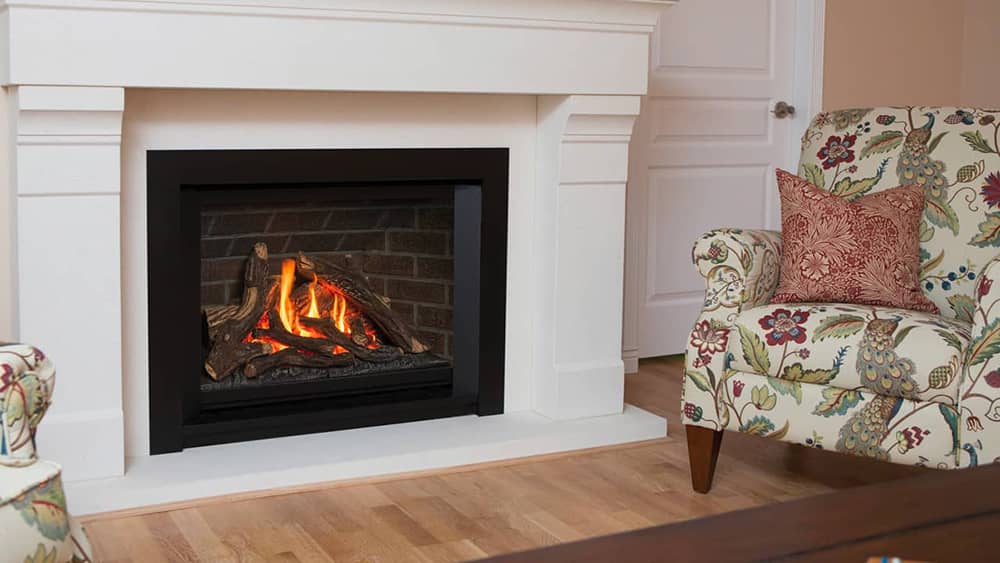
How a gas fireplace works, in short
A gas fireplace produces sustained flames and heat through three basic mechanisms: air intake, combustion, and exhaust. Fuel flows from a gas line into a burner, an ignition source lights it, and the resulting flames warm the firebox, the room, and a set of decorative logs or glass media that mimic a traditional fire.
The three core mechanisms work like this:
- Air intake. Air is drawn in to support combustion, either from inside the room or, in modern direct vent models, from outside through a sealed pipe.
- Combustion. Gas mixes with that air and ignites at the burner, producing flames and heat inside the firebox.
- Exhaust. Combustion byproducts are vented outside through a flue or vent pipe, while the heat stays in the home.
Most modern gas fireplaces use a sealed combustion system, which keeps the fire fully separated from your indoor air. That's the key reason today's units are dramatically more efficient and safer than the open-hearth fireplaces they replaced.
The Core Components of a Gas Fireplace
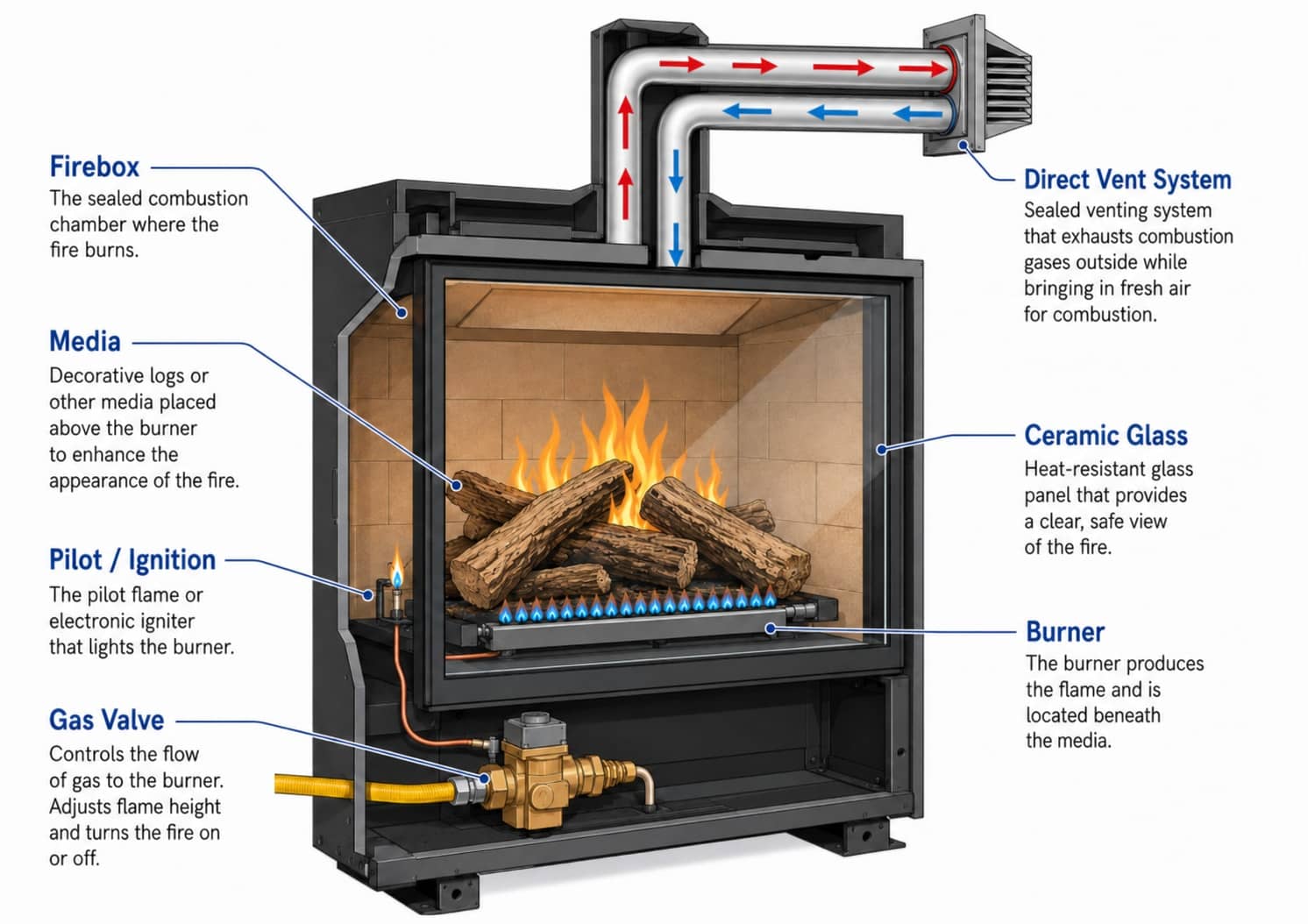
Understanding the mechanism gets easier when you know the parts. A typical gas fireplace has seven main components, each playing a specific role.
For every component in one place, see gas fireplace parts explained.
Fuel Supply
Gas fireplaces run on either natural gas (NG) or propane (LPG). Natural gas is supplied through your home's gas line at a lower pressure, while propane comes from a tank and runs at roughly twice that pressure. The burner and regulator are calibrated to one or the other, so the fuel type is set at installation.
Gas valve and regulator
The gas valve controls fuel flow into the fireplace. It stays closed by default and only opens when you signal a call for heat through a wall switch, remote, or thermostat. The regulator manages pressure so the burner receives a steady, safe flow of gas.
Pilot or electronic ignition
This is what lights the fire. Two systems dominate the market:
- Standing pilot. A small flame burns continuously, ready to ignite the main burner whenever the valve opens. A thermocouple monitors that flame and shuts off the gas if it ever goes out, which is the core safety mechanism.
- Electronic ignition (IPI). No standing pilot. The system sparks a flame only when heat is called for, saving fuel over time. Most modern Valor gas fireplaces use this approach.
Burner
The burner is a perforated tube or ceramic plate. Gas flows through small openings, mixes with air, and ignites along the surface, producing the flame pattern you see. Burner design is what makes one fireplace's flame look like a campfire and another's look like a sleek ribbon of fire.
Media - Logs, glass or stone
The decorative material sitting on the burner is the media. Ceramic logs are the most familiar, but modern fireplaces also use glass beads, river rocks, driftwood, or pinecones. The media doesn't burn. It heats up and glows, giving the flames their realism and shaping how the fire looks.
Sealed firebox and ceramic glass
The firebox is a steel chamber engineered to contain combustion safely. A ceramic glass panel seals the front. Ceramic glass can withstand much higher temperatures than regular tempered glass, which is why it stays intact at full burn. The seal between glass and firebox is what makes sealed combustion possible.
Venting system
Finally, the vent. This is the pathway that brings combustion air in (on direct vent models) and takes exhaust out. The type of venting defines how the fireplace operates and where it can be installed.
For how each venting type behaves, read our gas fireplace venting guide.
The Combustion Process, Step by Step
Here's what happens from the moment you press the switch:
- The call for heat. A wall switch, remote, or thermostat signals the gas valve to open.
- Ignition. Either the standing pilot lights the main burner, or the electronic ignition sparks and creates a flame.
- Combustion. Gas flowing through the burner mixes with air and burns, producing flames, heat, and exhaust gases (primarily carbon dioxide and water vapor).
- Heat transfer. The firebox walls heat up. The ceramic logs or glass media absorb heat and glow. Radiant heat passes through the glass into the room.
- Exhaust. Combustion byproducts rise out of the firebox and are carried outside through the vent pipe.
- Shut-off. When you turn the fireplace off, the gas valve closes, the flame stops, and the firebox cools down.
How a Direct Vent Gas Fireplace Works
Direct vent is the standard for modern gas fireplaces, and it's worth understanding on its own.
A direct vent gas fireplace uses a sealed combustion system. The firebox is closed off from the room behind ceramic glass, and a special coaxial vent pipe handles both incoming air and outgoing exhaust. The vent is essentially a pipe within a pipe: the outer chamber draws fresh combustion air in from outdoors, and the inner chamber pushes exhaust gases out. The two streams never mix, and neither one ever touches your indoor air.
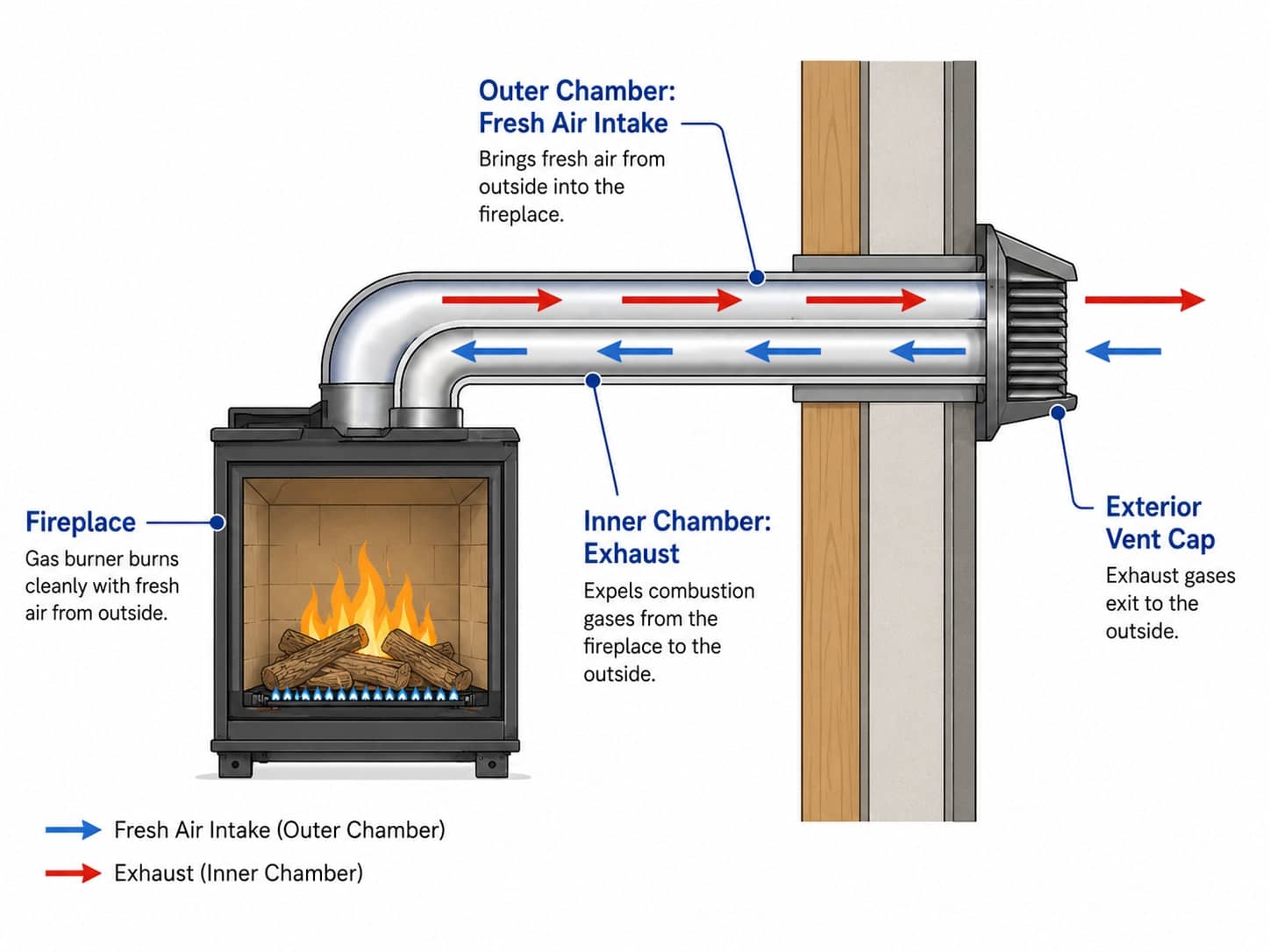
This design has three big consequences:
- Indoor air quality stays untouched. Because combustion uses outside air and exhaust goes back outside, the system doesn't consume oxygen from your room or release byproducts into it.
- Efficiency climbs dramatically. A sealed firebox keeps roughly 70–85% of the heat in your home, compared to about 15% for a traditional open-hearth fireplace.
- Installation is flexible. Because there's no chimney required, a direct vent fireplace can vent horizontally through an exterior wall or vertically through the roof, which means it can go almost anywhere — including bedrooms, kitchens, and additions where a traditional chimney was impossible.
Many direct vent gas fireplaces, including Valor's, also operate without electricity. That makes them genuinely useful during power outages, not just decorative.
How a Gas Fireplace Heats a Room
A common misconception is that gas fireplaces are mostly for ambiance. The good ones are real heaters. They deliver warmth in two distinct ways.
Radiant heat is the direct, infrared warmth you feel on your skin when you sit near the fireplace. It travels through the ceramic glass and warms people, furniture, and surfaces in the room rather than the air itself. This is the same kind of heat you feel from the sun on a cool day. It's immediate and physically comforting, and it's the type of heat Valor's fireplaces are specifically engineered around. You can read more about radiant heat and why it feels so different from forced air.
Convective heat warms the air. As the firebox heats up, air circulating around it (sometimes through a secondary heat exchanger or a convective channel) absorbs heat and rises into the room. Some fireplaces use a small fan to push that warm air out faster, while others rely on natural convection — quieter, but slower to fill the room.
The best gas fireplaces use both. Radiant heat for the felt sense of warmth, convective heat to raise the room's overall temperature. If you want to go deeper on this, Valor's piece on the science of warmth explains the physics in plain language.
Direct Vent vs. B-vent vs. Ventless: a Quick Comparison
Three venting types exist, and they perform very differently.
- Direct vent. Sealed combustion, outside air in and out, no chimney needed. Highest efficiency, best indoor air quality, most installation flexibility. This is the modern default.
- B-vent (natural vent). Older technology. Pulls combustion air from inside the room and vents exhaust vertically through a chimney or flue. Less efficient, more prone to drafts, and increasingly rare in new installations.
- Ventless (vent-free). No venting at all. Combustion byproducts release directly into the room. Banned or restricted in many jurisdictions, including parts of Canada, due to indoor air quality and moisture concerns.
For most homeowners building or renovating today, direct vent is the only option that meaningfully balances heat, safety, and design flexibility.
Why this Matters when Choosing a Gas Fireplace
Understanding how a gas fireplace works changes the questions you ask before you buy.
Instead of asking "which one looks best," you start asking which burner design produces the flame style you want. Instead of asking "will it heat the room," you start asking about radiant output, convective design, and BTU rating relative to your room size. Instead of assuming all gas fireplaces are similar, you can spot the difference between a unit engineered for real heat and one built mostly for show.
These details are where Valor's lineup is specifically engineered to perform. You can browse Valor's gas fireplace range to see how different models handle radiant heat, venting, and design, or read the ultimate guide to gas fireplaces for a broader walkthrough of types, costs, and considerations.
Frequently Asked Questions
Does a gas fireplace need electricity to work?
Many direct vent gas fireplaces, including most Valor models, operate without household power. The pilot or millivolt system generates its own electricity, so the fireplace keeps producing heat during outages.
Is a gas fireplace safe?
Yes, when installed by a certified professional. Modern direct vent fireplaces use sealed combustion, automatic shut-off valves, and ceramic glass to keep combustion fully separated from indoor air. A working carbon monoxide detector is still recommended in any home with gas appliances.
How efficient is a gas fireplace?
Direct vent gas fireplaces typically run at 70–85% efficiency, compared to roughly 15% for a traditional open wood fireplace. That efficiency is why a gas fireplace can meaningfully offset your central heating in the rooms you use most.
Can a gas fireplace heat my whole house?
Generally no, and it isn't designed to. A gas fireplace is a zone heater. It excels at warming the room it's in, letting you keep the rest of the home cooler — which is where the energy savings come from.
What's the difference between natural gas and propane fireplaces?
The fuel delivery and pressure differ, but the experience is nearly identical. The burner and regulator are calibrated at the factory to one fuel or the other, so the choice is set at installation based on what's available at your home.
Talk to a Local Valor Dealer
A gas fireplace is a long-term purchase, and the right model depends on your room, your venting layout, and how much heat you actually want. A local Valor dealer can walk you through your options, measure for proper sizing, and handle the installation safely. Get connected with your nearest dealer to start the conversation.
Table of Contents