
Home > Fireplace Blog > Convert a wood fireplace to gas: inserts, logs and cost
There's a moment most wood-fireplace owners know well. It's a cold night, you want a fire, and the thought of hauling logs, building kindling, waiting for it to catch, then sweeping ash in the morning sends you back to the thermostat instead. That gap between wanting a fire and actually lighting one is the main reason homeowners decide to convert a wood fireplace to gas.
Here's the good news: if you have a real wood-burning fireplace, you can almost certainly make the switch. The honest catch is that your options, your cost, and your installation all depend on what you're starting with. This guide walks through whether your fireplace qualifies, the three ways to convert it, what each path costs, and the venting and safety details that decide which one is right for your home.
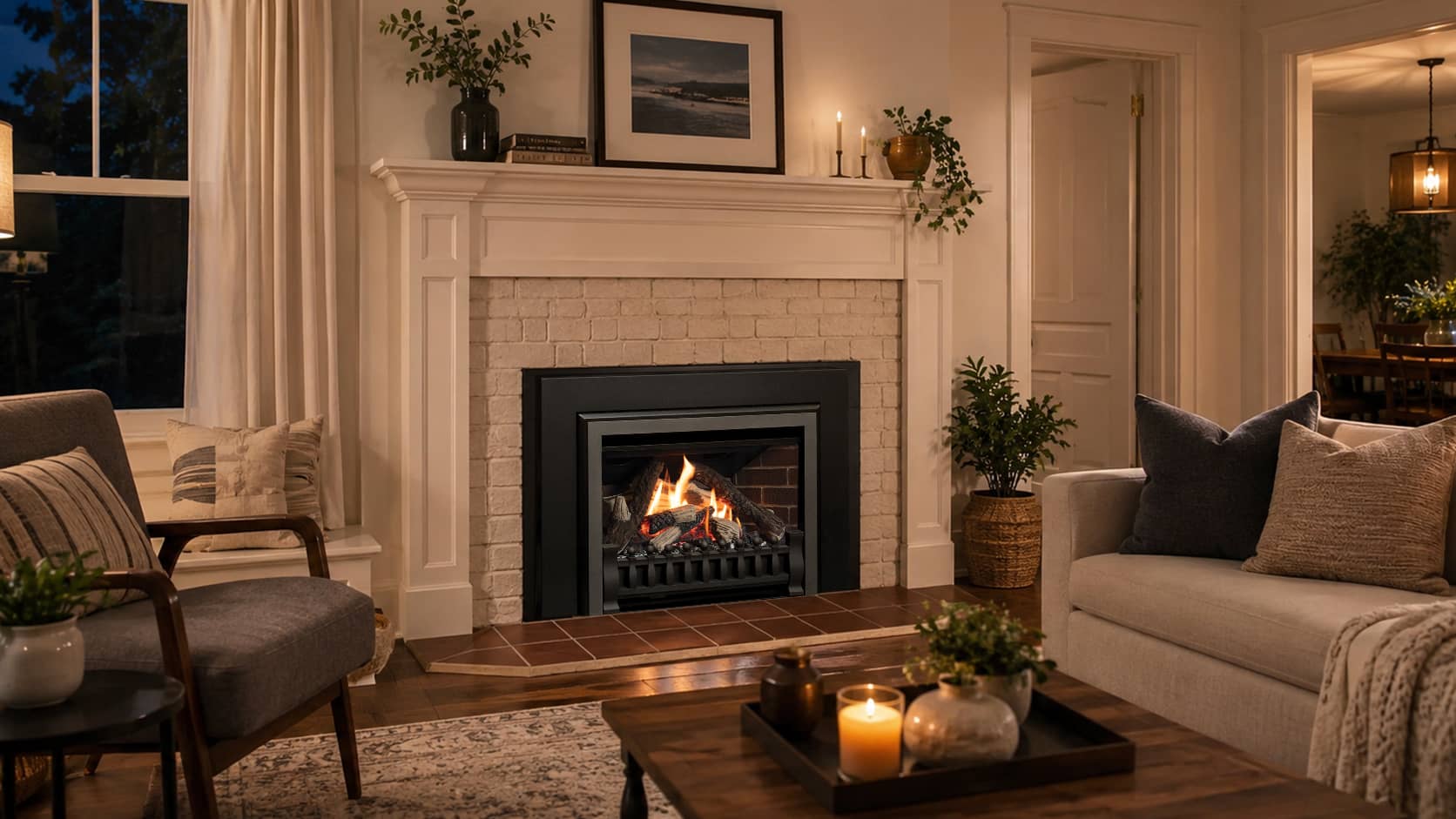
Can you convert a wood fireplace to gas?
Yes, in most cases you can convert a wood fireplace to gas, as long as you're starting with an existing wood-burning fireplace and a sound chimney. The one hard limit is that wood stoves and most freestanding wood appliances cannot be converted, because they aren't built to house a gas system. Masonry fireplaces are the easiest to work with. Factory-built (prefab or zero-clearance) fireplaces can often be converted too, but only with a unit the manufacturer approves for that specific firebox, so compatibility has to be confirmed first.
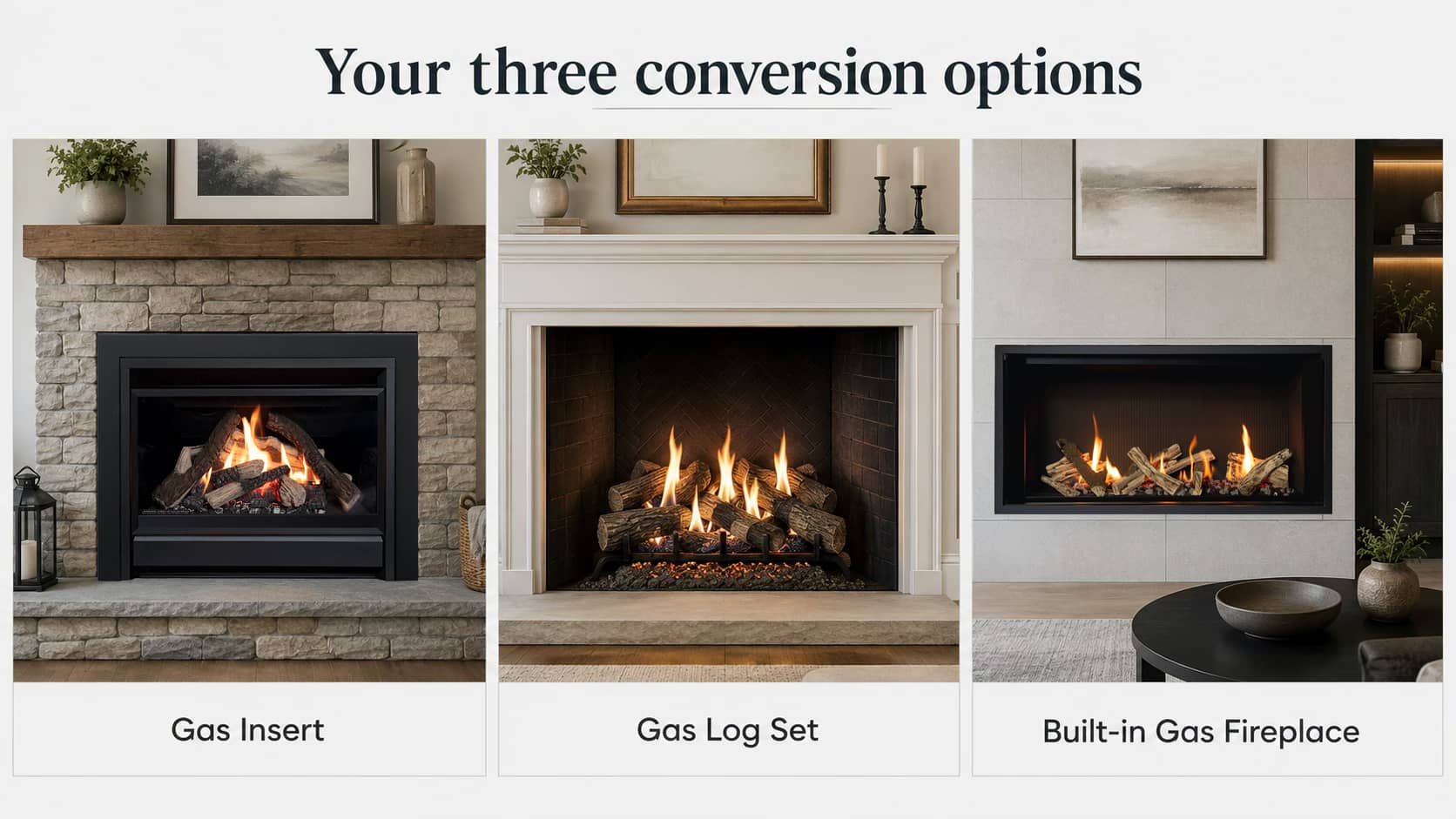
Once you know your fireplace qualifies, the conversion comes down to three paths:
- Gas insert: a sealed gas firebox that slides into your existing opening and vents through the chimney. The best heat and efficiency.
- Gas logs: a burner and ceramic log set that drops into the open firebox. The lowest cost, mostly for looks.
- New gas fireplace: removing the old firebox and installing a new built-in unit. The biggest project, usually done during a remodel.
If you're still getting familiar with how these systems run, it's worth reading how a gas fireplace works before you choose. The differences between the three options below come down to how each one handles heat, venting, and budget.
Three Conversion Options
Gas insert: the performance choice
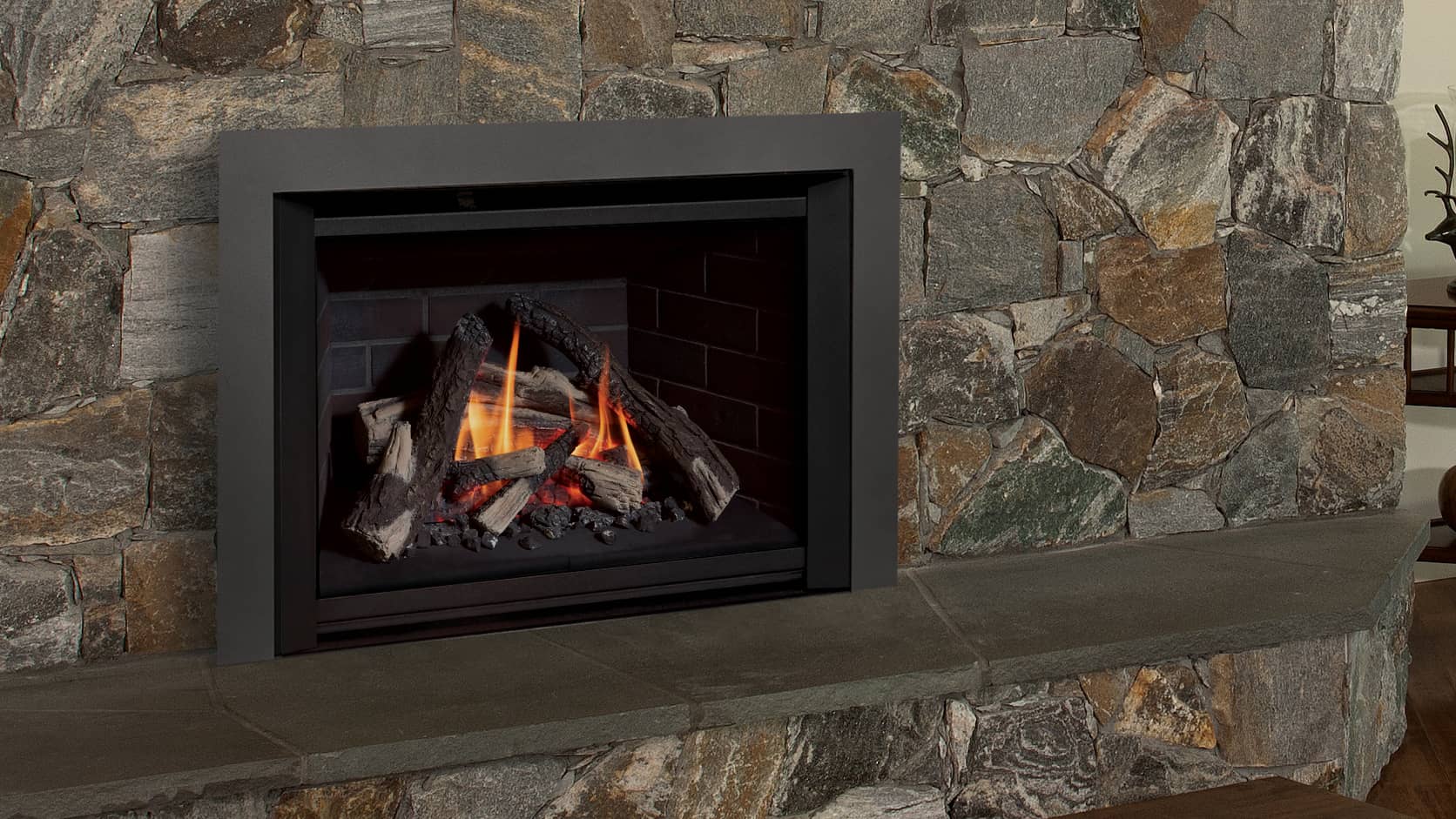
A gas insert is a self-contained, sealed firebox that fits inside your existing masonry opening and vents through the chimney with a stainless steel liner. Because it's sealed and direct-vented, it doesn't send heated room air up the flue the way an open fire does. That's exactly why inserts deliver the most usable heat and the highest efficiency of the three options.
This is the route most homeowners take when they want the fireplace to actually warm the room, not just glow in the corner. Valor's gas fireplace inserts are designed specifically as wood-fireplace replacements, with models sized for everything from compact fireboxes to wide masonry openings. If heat output and lower running costs matter to you, the insert is the strongest pick.
For how an insert compares with a built-in unit, see gas inserts vs zero-clearance fireplaces.
Gas logs: the budget choice
Gas logs are a burner and a set of ceramic logs that sit inside your open firebox. They're the simplest and cheapest way to switch, and they keep the open-hearth look many people love. The tradeoff is performance. Vented gas logs need the damper to stay open, which means a lot of your heat goes straight up the chimney, so they're chosen more for ambiance than for warming a room./p>
If your goal is the easy charm of a fire without the wood, and you're not counting on the fireplace as a heat source, gas logs do the job for far less money. Just know you're trading efficiency for simplicity.
For how log material, size and realism differ, see how to choose gas fireplace logs.
New gas fireplace: the remodel choice
The third option is to remove the existing firebox entirely and install a new built-in gas fireplace. This is the most involved and most expensive path, but it opens up design freedom that the other two can't match: linear flames, larger viewing areas, and modern fronts that an old masonry opening was never built for.
It rarely makes sense on its own. Where it does pay off is during a larger renovation, when the wall is already coming apart and you're rethinking the whole space anyway.
Gas insert vs. gas logs: which is right for you?
For most homeowners, the real decision isn't all three options. It's the insert versus the gas log set. The cleanest way to choose is to ask what you actually want the fireplace to do.
Choose a gas insert if you want energy-efficient heat. It's sealed, efficient, and built to warm the room, which makes it the better long-term value even though the upfront cost is higher. Lower running costs help close that gap over time, and you can see how the math works in our guide to gas fireplace efficiency.
Choose gas logs if you mainly want the look, you're on a tighter budget, or you only light a fire occasionally. You'll spend less to install, but you won't get the heat performance or the efficiency of an insert.
A simple rule of thumb: if the fireplace is a heat source, go with an insert. If it's a centerpiece you light a few times a winter, gas logs are enough.

What it costs to convert a wood fireplace to gas
Cost is usually the deciding factor, and it varies widely depending on the option you choose and the condition of your fireplace and chimney. These are typical installed ranges, not Valor pricing, since Valor sells and installs through local authorized dealers who set their own rates.
- Gas insert: roughly $2,500 to $6,000+ installed, depending on the model and the work your chimney needs.
- Gas logs: roughly $300 to $2,000, with vented sets and added gas line work landing at the higher end.
- New gas fireplace: roughly $3,000 to $15,000 or more, since it involves demolition and rebuilding.
On top of the unit itself, a few add-ons move the final price:
- Chimney liner: about $900 to $3,800 for a stainless steel liner that's rated for gas, which most inserts require.
- Gas line: about $200 to $1,000 to run a new line, depending on distance from the supply.
- Inspection and cleaning: about $100 to $600 to inspect the flue and clear creosote before installation.
- Permits: roughly $50 to $200, depending on your municipality.
The single biggest variable is how much work your existing setup needs. A masonry fireplace with a working chimney and a nearby gas line is a clean, lower-cost job. A fireplace that needs a new liner, a long gas run, or chimney repair climbs quickly. It also helps to weigh the ongoing side of the decision, not just the install: our breakdown of the cost to run a gas fireplace shows how operating costs compare to feeding a wood fire all winter.
Venting and safety
Venting is where the options separate, and it's the part of the project you can't shortcut.
A vented system, whether an insert or a vented log set, sends combustion byproducts outside through the chimney or a direct-vent pipe. A sealed direct-vent insert is the safest and most efficient setup, because it draws outside air for combustion and keeps your indoor air completely separate from the fire.
A ventless (vent-free) system burns without a flue and releases its combustion products into the room. It's cheaper and puts more heat into the space, but it comes with real restrictions and safety concerns. Ventless gas appliances are banned in Canada under CSA B149.1, and they're prohibited in California and Massachusetts. Several other jurisdictions limit them, and they're not recommended for anyone with asthma or other respiratory conditions. Because Valor serves both the US and Canadian markets, every Valor gas product is a sealed, direct-vent design rather than a vent-free one.
If you want to understand how these systems differ before talking to a dealer, our fireplace venting guide compares the main types side by side. The short version: for a wood-to-gas conversion, a sealed direct-vent insert gives you the best balance of safety, efficiency, and clean indoor air.
The conversion process, and why it's a pro job
Converting a wood fireplace to gas is not a weekend project. It involves gas lines, venting, and local code, which means it should be handled by a licensed professional. In many areas, doing the gas work yourself isn't just unsafe, it's against the law.
Here's what the process generally looks like:
- Inspection. A technician checks the firebox and chimney to confirm they're safe and compatible with gas.
- Gas line. If there's no existing line, one is run to the fireplace, which can mean opening a wall or floor.
- Installation. The insert or log set is fitted into the firebox, connected to the gas supply, and sealed.
- Venting and safety check. A liner or direct-vent system is installed and tested, and the whole setup is checked before first use.
Done right, most insert conversions are completed in a day. The value of a professional isn't only the labor. It's making sure the venting, clearances, and gas connection all meet code, so the fireplace is safe for years.
How Valor Fits
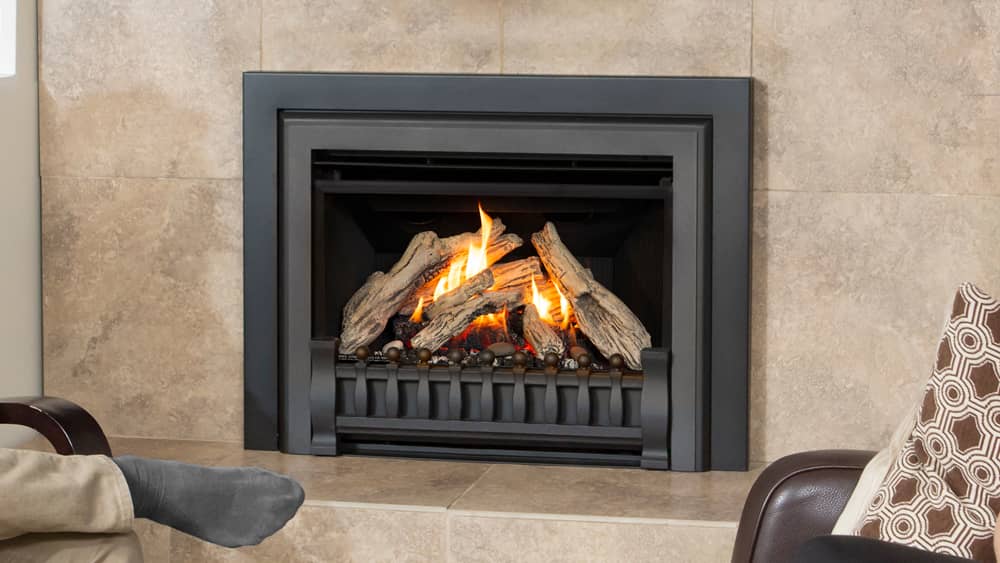
Valor builds gas inserts designed to do exactly what this article is about: replace a wood-burning fireplace with something cleaner, more efficient, and easier to live with. The G3 and G3.5 gas insert models suits standard masonry openings, the G4 gas insert is built for larger wood fireplaces, and the RetroFire insert is designed for a straightforward masonry install.
All of them are sealed, direct-vent units engineered for real radiant and convective heat, not just flame effect. Because Valor sells through an authorized dealer network across the US and Canada, you also get something a box-store purchase doesn't include: a local expert who assesses your fireplace, recommends the right model for your opening and your heating goals, and handles installation to code.

Ready to make the switch?
Converting a wood fireplace to gas is one of the most satisfying upgrades you can make to a home. No more hauling wood, no more ash, and a fire that's ready the moment you want it. The right path, an insert, gas logs, or a full new fireplace, comes down to how much heat you want, your budget, and what your existing fireplace and chimney can support.
The best next step is a conversation with someone who can look at your actual setup. Connect with an authorized Valor dealer for a free, no-obligation quote, and get a clear recommendation for your home before you commit to anything.
Table of Contents