
Home > Fireplace Blog > Gas Fireplace Inserts vs Zero-Clearance Gas Fireplaces
People shopping for a gas fireplace insert vs a zero-clearance (or built-in) gas fireplace often treat the two terms as the same thing. They aren't. They describe two different products built for two different situations, and choosing the wrong one can mean tearing out a wall you never needed to touch, or falling for a fireplace your home physically can't accept.
The good news is that the difference is simple once you see it. It comes down to one question: do you already have an existing wood-burning fireplace, or are you starting from a bare wall? Answer that, and most of the decision makes itself. The rest is about cost, heat, and how much design freedom you want.
Here's how to tell them apart and pick the one that actually fits your home.
The Short Answer
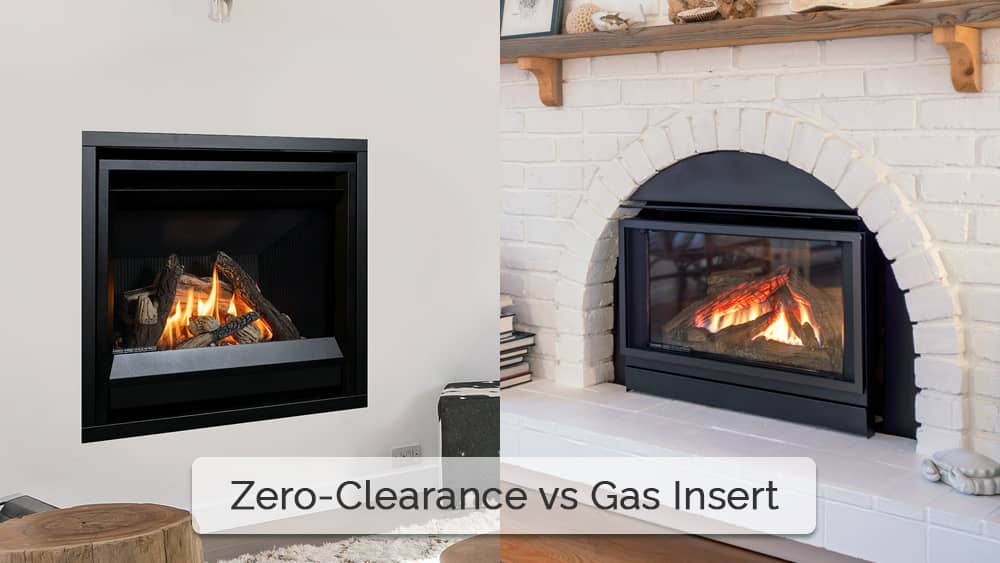
A gas fireplace insert is a sealed gas unit that slides into an existing masonry or wood-burning fireplace, reusing the opening and chimney you already have. A zero-clearance gas fireplace is a complete unit framed into a wall during construction or a remodel, with its own firebox and its own venting. You don't need an existing fireplace when installing built-in fireplace. You do for an insert.
If you have an old wood-burning fireplace and want to upgrade it, you want an insert. If you're building, renovating, or adding a fireplace where none exists, you want a zero-clearance.
| Gas Fireplace Insert | Zero-Clearance Gas Fireplace | |
|---|---|---|
| Best for | Upgrading an existing wood-burning fireplace | New builds, renovations, or adding a fireplace from scratch |
| Installation | Slides into the existing firebox | Framed into a new or remodeled wall |
| Venting | Routed up the existing chimney | Direct vent through an outside wall or roof |
| Cost | Generally lower reuses existing structure |
Generally higher framing and finishing add cost |
| Design Flexibility | Limited by the existing opening | Wide range of sizes, shapes, and placements |
| Heat Output | Strong radiant heat for the room | Strong, with more options for larger spaces |
What a Gas Fireplace Insert Really Is
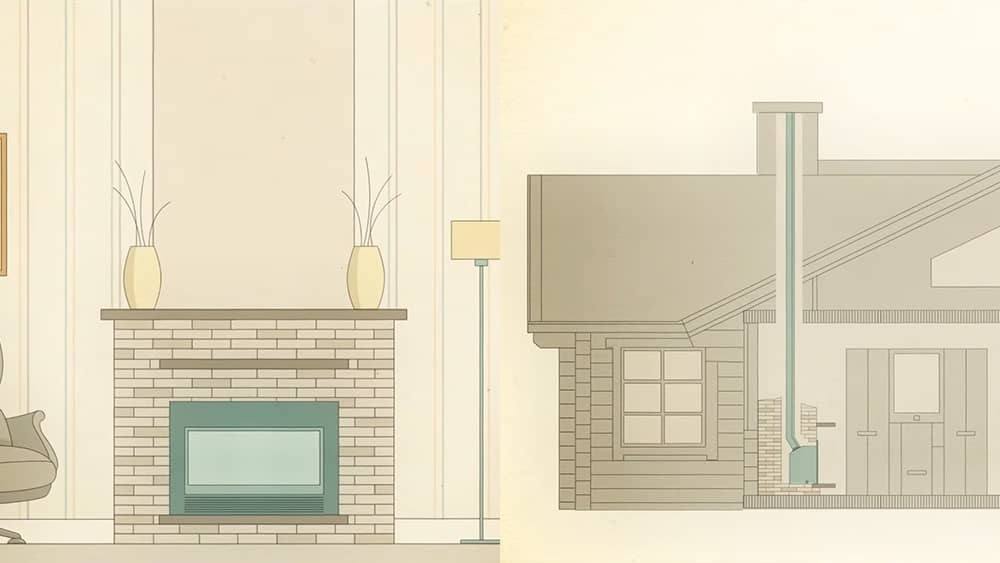
An insert is a retrofit. It takes a drafty, inefficient wood-burning fireplace and turns it into a clean, controllable gas appliance without rebuilding anything.
The unit itself is a sealed firebox that fits inside your existing masonry opening. Once it's in, the old fireplace becomes the housing, and the insert does all the work: realistic flames, steady radiant warmth, and a glass front that seals the firebox so your heated room air stays in the room instead of escaping up the chimney. That seal is a big part of why inserts heat so much better than the open fire they replace.
Venting is where inserts earn their reputation for easy installation. Rather than building a new vent run, the insert vents up through your existing chimney using a liner kit, drawing combustion air from outside and exhausting it back out. You can see how this compares to other systems in our guide to gas fireplace venting. Because the structure is already there, a clean retrofit can often be done in a day.
This is exactly what Valor gas fireplace inserts are designed for. Models like the RetroFire and the G3 slot into existing masonry openings and deliver real radiant heat, not just ambiance. If your fireplace looks original to the house and you're tired of hauling wood, an insert is usually the smartest, least invasive upgrade you can make.
Watch Now - What is a Gas Fireplace Insert?
If you are starting from a wood-burning fireplace, read our guide to converting a wood fireplace to gas.
What a Zero-Clearance Gas Fireplace Really Is
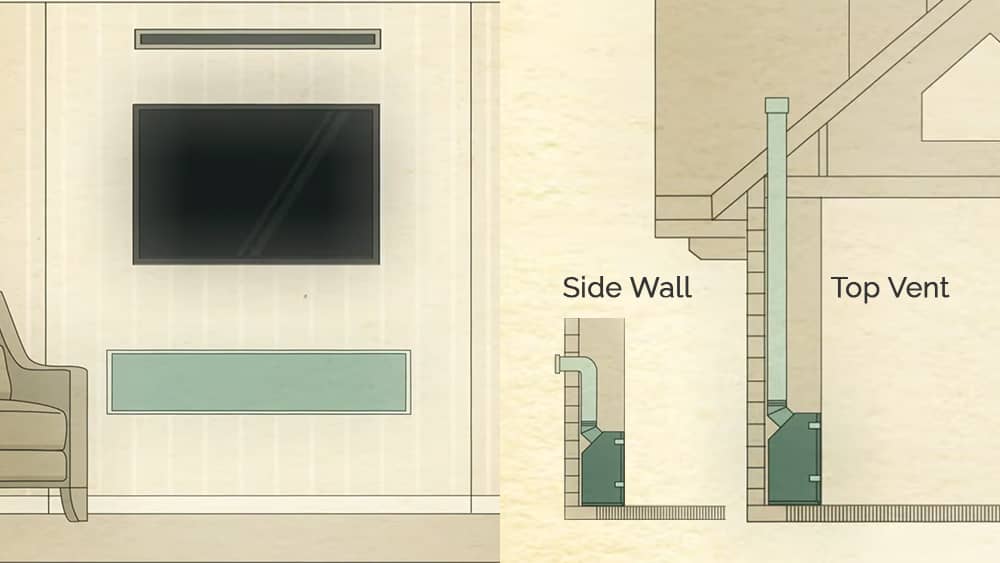
A built-in gas fireplace starts with a wall, not a fireplace. It's a self-contained unit framed directly into new or remodeled construction. Because the firebox is built to sit safely against framing, you don't need any existing masonry or chimney.
That freedom is the whole appeal. Zero-clearance gas fireplaces can go almost anywhere you can frame a wall and run a vent. It can be a traditional front-facing fireplace, a wide linear design, a see-through unit between two rooms, or a multi-sided centerpiece in an open-plan space. Sizes range from compact to large-format, so you're matching the fireplace to the room instead of squeezing it into a fixed hole.
Venting works differently too. Instead of running up an existing chimney, vent horizontally through an outside wall or vertically through the roof. That opens up placement options a chimney-bound insert simply can't reach.
Valor's zero-clearance gas fireplaces cover this entire range, from the compact, efficient H5 to wide linear and multi-sided models built to anchor a room. If you're designing the space around the fireplace rather than the other way around, a zero-clearance provides that flexibility.
Watch Now - What is a Zero-Clearance Gas Fireplace?
How the Two Compare Where it Counts
Once you know which category fits your home, four practical factors decide the rest.
Installation and where each can go
This is the cleanest dividing line. An insert needs an existing fireplace to live in, and its placement is fixed by where that fireplace already sits. A zero-clearance gas fireplace needs framing and a vent path, but within those limits it can go almost anywhere. If you love the spot your current fireplace occupies, an insert keeps it. If you want the fireplace somewhere new, only a built-in can deliver that.
Cost
Inserts generally cost less, because they reuse the structure and chimney you already own. A zero-clearance typically runs higher, since you're paying for framing, a full venting run, and the finishing work around the unit such as the surround, mantel, and facing. Neither is "cheap," and pricing depends heavily on the model and the complexity of the install, so the right move is to get a quote on the specific unit you're considering rather than working from a ballpark.
Heat and efficiency
Both options heat far better than an open wood fire, and both can serve as real supplemental heat rather than decoration.
Efficiency is worth a closer look here, because it's reported differently across North America. In the United States, gas fireplaces are rated by AFUE, while in Canada the EnerGuide program reports a fireplace efficiency, or FE, figure. Valor units are engineered and rated for genuine radiant warmth in both markets, which means you can compare them honestly wherever you live. You can dig into the details in our breakdown of gas fireplace efficiency.
Design flexibility
This is where zero-clearance models pull ahead. An insert is shaped by the opening it fills, so your design choices are mostly about the front, the media bed, and the finish. A built-in lets you choose the size, the orientation, and the entire look from scratch. If a striking, made-to-measure focal point matters more to you than keeping your existing fireplace, a zero-clearance is the natural choice.

So which one is right for you?
Strip away the marketing and the decision is almost always answered by your home, not your taste.
Choose a gas fireplace insert if you already have a wood-burning fireplace you want to keep, you'd rather not open up walls, and you want an efficient upgrade with minimal disruption. It's the practical, lower-cost path to modernizing a fireplace you already have.
Choose a zero-clearance gas fireplace if you're building or renovating, you don't have an existing fireplace, or you want a specific size, shape, or location that a fixed masonry opening can't accommodate. You'll invest more, but you get a fireplace designed around your space.
If you're somewhere in between, for example mid-renovation with an old fireplace you may or may not keep, that's exactly the moment to bring in a professional before you commit.
For the full range of gas fireplace types, see the 12 types of gas fireplaces.
Getting the spec right before you buy
Whichever direction you lean, two details decide whether you end up happy: size and venting.
Sizing is about matching the unit's heat output and dimensions to the room. An oversized fireplace can overheat a small space, while an undersized one disappoints in a large one. Our guide to choosing the right fireplace size walks through how to balance viewing area, BTUs, and room size.
Venting is the other piece. An insert depends on your existing chimney being sound and correctly lined, while a zero-clearance needs a viable direct vent path through a wall or roof. Both are routine for a qualified installer, but both can quietly rule out a unit you had your heart set on, which is why a professional assessment early saves money later.

Talk to an authorized dealer who installs both
The fastest way to get this right is to talk to someone who sells and installs inserts and zero's side by side, and who can look at your actual fireplace or wall before you spend a dollar. A good dealer will tell you which option your home supports, what it will cost to install, and which model fits the space.
Find an authorized Valor dealer near you to compare gas fireplace inserts and zero-clearance models in person, and get a quote built around your home.
Table of Contents